
Review by Kaitlyn Choy
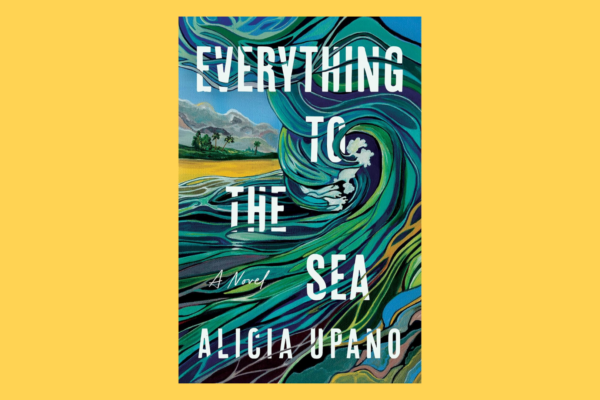
Alicia Upano, Everything to the Sea. William Morrow, July 2026.
Hawaiʻi-born author Alicia Upano makes an impressive debut with a heartbreakingly beautiful story of enduring love, profound loss, and the gradual journey of healing against the backdrop of catastrophe. Set in Hilo, Hawaiʻi, Everything to the Sea (2026) follows Jane and Kenji, whose all-consuming whirlwind summer romance is upended when an unexpected tsunami devastates their hometown. While Jane leaves in pursuit of her architecture dream and a life beyond the grief that has come to define Hilo, Kenji remains, dedicating himself to rebuilding the community and honoring his home. The young couple reunites years later, still grappling with the aftermath of the wave, still reckoning with the lives they’ve built apart, still bound by a profound love that neither time nor distance could wash away. A sweeping love story shaped by disaster, Upano explores the coexistence of contradictions within the tumultuous landscapes of love and loss, and reality and representation, anchoring Everything to the Sea in emotional intricacy and cultural frameworks.
The story unfolds as a four-part narrative with alternating perspectives of Jane and Kenji, through which the novel resists the illusion of a moral binary, challenging it as an oversimplification that flattens the inherently complex and emotionally charged nature of human experience. Instead, the narrative dwells within persistent tensions that foreground the fragile yet powerful relationship shared between the two characters. What is sacrifice and what is self-erasure? Can love manifest differently while still being equal in truth? To stay or to leave, to look to the future with hope or to honor the past with devotion—these are the decisions that separate the young couple, yet simultaneously function as parallel responses to the same unbearable tragedy. With each emerging as an earnest attempt at resilience and survival, there is an absence of assigned moral certainty, and perhaps the only certainty is that which lies in the existence of a braided reality where opposing truths coexist with equal legitimacy, like the two strands of lei hilo, twisted and bound together to form something meaningful and whole.
It is through the dual storytelling that allows Jane and Kenji to be humanized, exposing the processes of grief and healing as nonlinear. While Kenji channels his pain into responsibility, finding solace in acts of service and restoration, Jane copes through distance. But her departure does not stem from a lack of care, as it could easily be assumed with a single perspective. Rather, it is a decision that is born from the same deep love for family that compels Kenji to stay—a love that is intertwined with survivor’s guilt, regret, and fear. Even from afar in California, she remains tethered to Hilo through the lingering imprint of her trauma. Her sketched designs of her childhood home, her instinctive comfort in higher ground, and her repeated attempts to numb herself through distraction reveal a longing for what she lost, shadowed by the fear of what it has become. As Kenji’s journey teaches him that kuleana should not necessitate relinquishing the self, Jane’s arc becomes one of rediscovering home and reconciling the past with the present.
By exhibiting the nuances and convoluted intricacies of human experience through the dual perspectives, Everything to the Sea achieves a profound sense of realism that Upano elevates through the blending of local culture into the narrative. She grounds the story in lived experience rather than romanticized idealism, building this authenticity through the finer details that describe life in Hawaiʻi: food as an expression of warm hospitality, lei as a symbol of joyous celebration, mentions of beliefs surrounding ancestral moths or Pele’s curse, and the daily intimacy (and nosiness) of an ʻohana that extends beyond blood, where “every elder is an uncle or an aunt, each peer a cousin of a sibling” (Upano 2026, 6). Intertwined with the fabric of everyday life, these details surface not as decorative references, but organically, functioning as integral elements that actively contribute to a faithful depiction. Kenji’s point of view especially reinforces the novel’s realism, as he provides an unflinching portrayal of the tsunami’s fallout: jam-packed shelters, orphaned children, endless debris, and an emotional climate imbued with a complicated mixture of frustration, devastation, and a tentative hope. His visceral reaction to the Hilo ruins offers an uncensored account that opposes the conventional tendency to exoticize Hawaiʻi.
Actively rejecting the stereotype of the perfect paradise through the focus on real-life disaster, Upano validates the hardships and vulnerabilities that are erased in mainstream representations. She further addresses the external commodification of Hawaiʻi and its people by weaving in conversations that reflect local resistance to media presence and commercial developers, who transform tragedy into spectacle and opportunities for financial gain. This tension between corporate interests and local values is embodied through Jane, who eventually returns to her hometown as an architect with an eco-resort project that threatens to disrupt and gentrify Hawaiʻi. Directly confronted with the consequences of the development, she must negotiate her personal and professional loyalties, choosing between the future she has long envisioned for herself and her deeply rooted commitment to the home she has never been able to truly leave behind. Upano, honoring the spirit of her upbringing, approaches these issues with a cultural care and sensitivity, prioritizing perspectives that are often overlooked. In doing so, the novel reclaims Hawaiʻi from reductive “tourist destination” renderings, instead presenting the islands as a place shaped both by beauty and struggle.
Upano immerses her audience in a transformative experience that pulls readers directly into the emotionally turbulent currents of the narrative. Creating a story that refutes the cliché utopia of clean resolutions and moral absolutes, she instead offers a unique space that allows for contradiction: love and grief, hope and fear, departure and return, old and new. Frustratingly magnetic and impossible to set aside, Everything to the Sea is a tidal wave of a novel: powerful, disorienting, and leaving the reader forever changed.
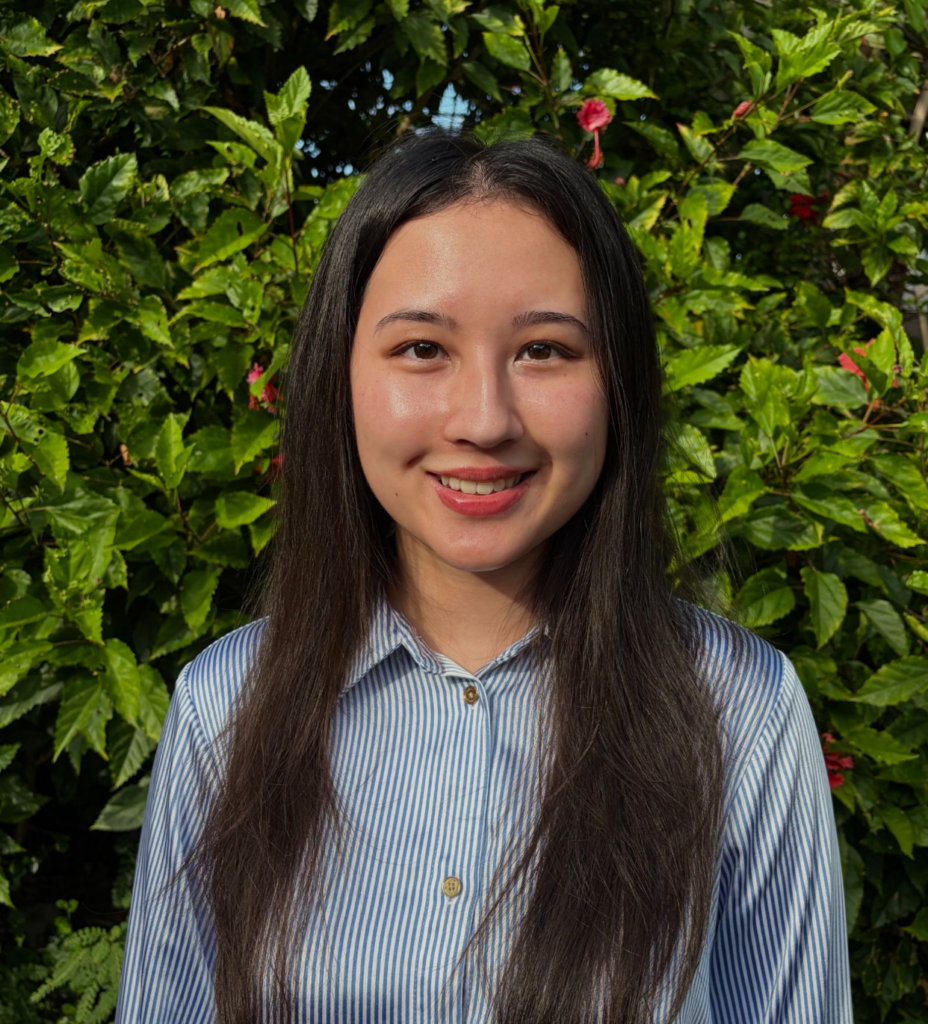
Kaitlyn Choy is a rising fourth-year undergraduate student at the University of Hawaiʻi at Mānoa pursuing a Bachelor of Arts in English with a concentration in composition and rhetoric. She plans to add Psychology as a second major, combining her knowledge to further explore how meaning is constructed across culture, language, and lived experience, while examining how these factors inform the creation and diverse interpretations of storytelling. Kaitlyn aims to use the opportunities provided through her position as a member of the summer staff at Mānoa Journal to deepen her understanding of the publishing process and gain insight into the possibility of editorial work as a professional aspiration.


Leave a Reply